"START DIGGING!"

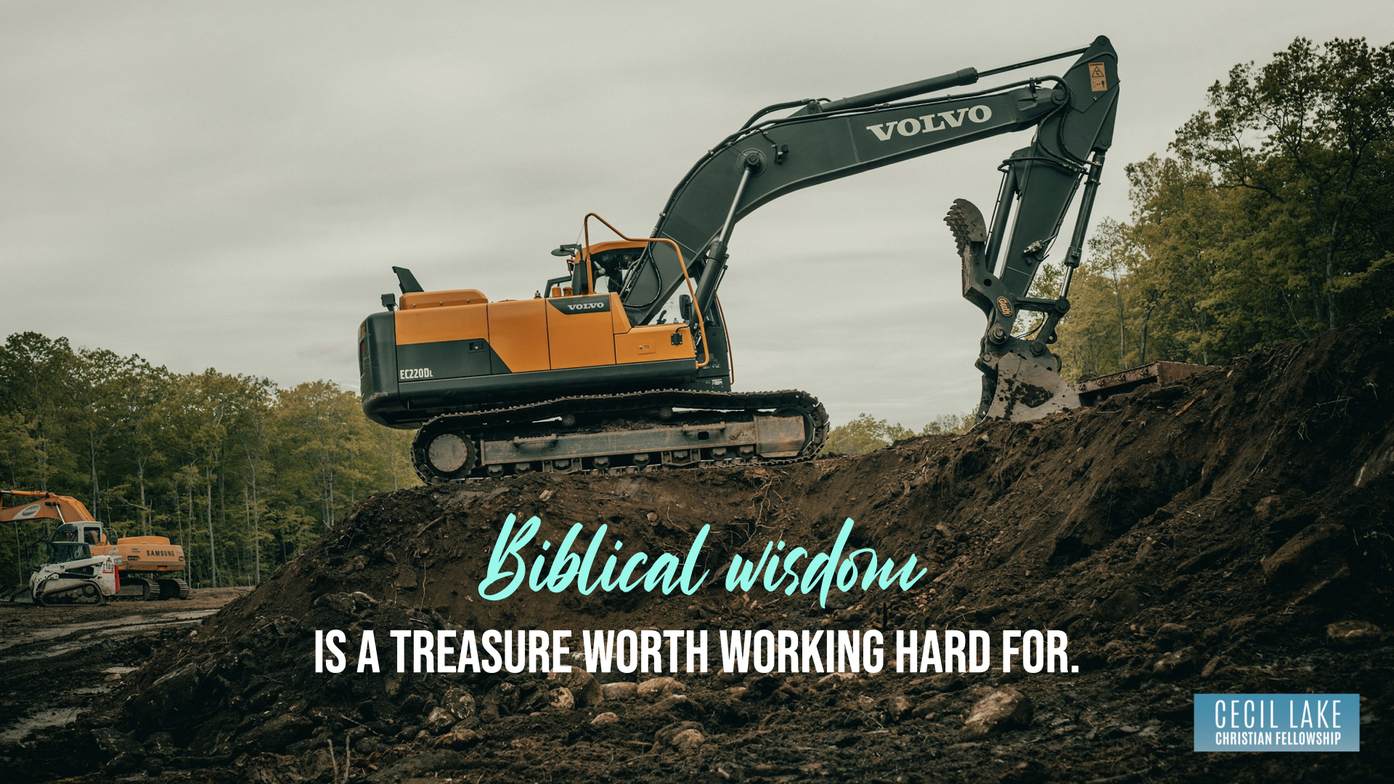
“Yes, if you call out for insight and raise your voice for understanding, if you seek it like silver and search for it as for hidden treasures, then you will understand the fear of the Lord and find the knowledge of God."
Proverbs 2:3-5
If you watch a local crew start a new build, they don't immediately start framing walls. They grab the excavator and shovels to start digging the foundation. They spend days out in the biting cold or under the summer sun, breaking through frozen ground, clay, and roots just to hit solid bedrock. You cannot build a home that survives a harsh Canadian winter or heavy snow load on loose surface soil—the builder knows he has to excavate deep below the frost line before he can elevate.
That is the hard truth. Everyone wants the stability of a house built on bedrock that can handle any storm, but very few are willing to do the grueling, unseen work below the frost line to build it. It is much easier to admire the structure than to spend days breaking through frozen ground.
Yet, spiritually speaking, we often try to do exactly that with God. We want the strong, unshakable foundation of His wisdom for our families, our finances, and our daily trials, but we refuse to dig. We want it delivered with zero effort.
But in today's passage, Solomon is clear: God's wisdom is not found sitting lightly on the surface of the text. If you want the foundation, you have to be willing to sweat in the dirt to dig it out.
Solomon instructs believers to actively pursue wisdom by crying out for insight rather than remaining passive. In Proverbs, he uses two specific Hebrew verbs to show what this looks like: qara, which means to call aloud or summon urgently, and nathan, which means to give forth or lift up one's voice. Both terms represent deliberate, vocal action rather than quiet compliance. God does not ask for an indifferent nod or a passive "whatever happens, happens" mindset. He expects a person to actively plead for the discernment he lacks. If he is not asking God for wisdom, he is proving he does not believe he needs it.
Solomon compares God's word to hidden treasure, showing that wisdom requires intense effort to uncover. In Proverbs, he uses the Hebrew verb chaphas, which describes a meticulous, exhaustive search, like someone painstakingly digging up an object intentionally buried deep below the surface. This is not like casually clearing snow off your front porch or raking up dead leaves in the yard. In the ancient world, mining for precious metals demanded grueling labor, physical exertion, and relentless effort under tough conditions. By using this picture, Solomon emphasizes both the incredible value of God's wisdom and the hard work required to pursue it.
Searching for wisdom "like silver" means waking up early, opening the text, comparing Scripture with Scripture, and doing the hard work. Too many Christians want the treasure of God's wisdom without being willing to sweat in His Word to get it.
The promise here is conditional. If you cry out and dig, then you will understand the fear of the Lord. The ultimate payoff of studying the Bible is not just winning religious arguments or fixing your earthly problems. The payoff is that you actually get to know God. You find a right reverence for Him and a true, intimate knowledge of who He is.
Here's my main point: God promises that you will truly know and honor Him, but only if you pray sincerely and search for His wisdom like you are digging for buried treasure. So, stop waiting for God to speak a fresh word while your Bible sits closed on the shelf. The unshakable truth you need to anchor your life is already there in the text, but it won't jump off the page on its own—open the Book, grab your shovel, and start digging.
Pursue the Savior today!
Photo by Billy Freeman on Unsplash

-
Location
-
Mailing Address