“HE KEEPS US SAFE”

12 “While I was with them, I kept them in your name, which you have given me. I have guarded them, and not one of them has been lost except the son of destruction, that the Scripture might be fulfilled.”
John 17:12
How can a completely sovereign God maintain absolute control over every outcome in the universe while still holding individual human beings genuinely responsible for the real choices they freely make? If God already knows every step we will take, how can our personal decisions carry genuine moral weight, and how do His perfect protection and our personal responsibility work together without canceling each other out?
John chapter 17 is a heartfelt prayer known as Jesus’ “High Priestly Prayer.” After delivering His Farewell Discourse, Jesus now prays for Himself, the disciples, and future believers. This moment is also the start of Jesus’ “time.”
In John 17:12, Jesus offers a glimpse into His ultimate care as the divine Shepherd: guarding His own while revealing how even a terrible heartbreak aligns with God's sovereign plan (John 6:39). Jesus reveals His divine role as the faithful Shepherd who securely guards His followers in God’s name, while acknowledging Judas’s tragic betrayal as the sovereign fulfillment of Old Testament prophecies.
Jesus highlights His deep, personal care by using two different terms to describe how He looks after His followers. First, He says He "kept" (tēreō) them, which speaks to a continuous, loving watchfulness—like a parent holding tightly onto a child in a crowded place to make sure he stays close and safe. He then adds that He "guarded" (phylassō) them, using a word that pictures someone standing guard at the gate, keeping active watch against outside threats.
One might ask, “If Jesus protected the disciples, then why did Judas fall away?” This is a good question. Judas’ backsliding was more about his rejection of Jesus rather than Jesus’ inability to protect Judas.
In the text, tēreō shows Jesus keeping His friends anchored on the inside, while phylassō shows Him standing as a shield against the dangers coming from the outside. By contrast, Judas is described as the "son of destruction" (ho huios tēs apōleias), a phrasing that essentially means someone whose life and choices are heading straight toward ruin. This makes it clear that Judas wasn't lost because Jesus slipped up on watch, but because Judas chose to walk away down a path of destruction, fulfilling what had been written long before (Acts 1:16-20).
Let me illustrate this to you.
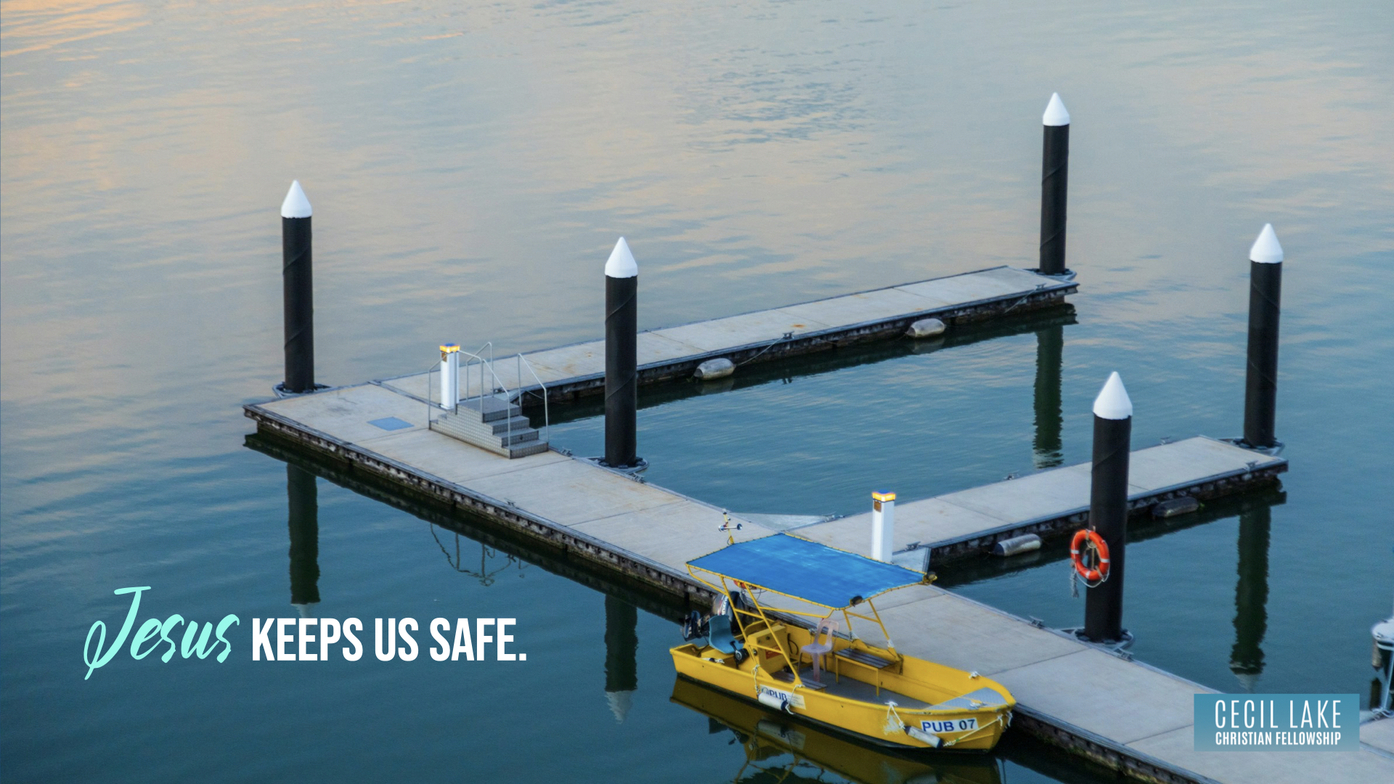
Visualize a boat tied safely in a harbor while a big storm rages outside. The lighthouse worker keeps a close eye on the water, keeps the harbor light bright, and makes sure all the ropes hold tight so the boats don't drift into the danger zone. Every boat that stays hooked to the heavy anchor stays safe from the giant waves. The lighthouse worker hasn't failed anyone; the harbor is completely secure, and the watchman is doing his job perfectly.
Now imagine one boat worker on board who decides to cut his own ropes, untie his anchor, and intentionally row his little boat straight out into the dark, crashing waves toward the sharp rocks. The lighthouse worker didn't lose him through a mistake or a lack of care; the boat worker simply walked away from safety and chose the rocks instead.
Jesus is our light and our anchor. Anyone who rests in Him is kept totally safe, protected by His almighty strength.
Are you trying to hold on to your faith through sheer willpower today, or are you resting in the secure, military-grade protection of Christ who holds you fast?
Pursue the Savior today!
Photo by Zhongwei Ji on Unsplash

-
Location
-
Mailing Address